Domestic Dog

Dogs were probably the first tame animals.

African Wild Dog

The African wild dog, also called Cape hunting dog or painted dog, typically roams the open plains and sparse woodlands of sub-Saharan Afri...

Dingo

Dingoes, though generally associated with Australia, likely originated from Southeast Asia and were introduced to Australia about 3,000 yea...

Thứ Hai, 12 tháng 9, 2016

The spectacular returning of the Giant Panda

The spectacular returning of the Giant Panda: There is delightful animal facts and news that Giant Pandas are no longer considered to be endangered animals, something that even now a couple of days later, is still sinking in with many people around the world.

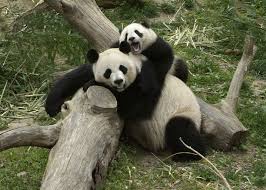
Kết quả hình ảnh cho giant panda

On Monday 4th September we were treated to the delightful news that Giant Pandas are no longer considered to be endangered animals, something that even now a couple of days later, is still sinking in with many people around the world. In the latest report by the IUCN (The International Union for Conservation of Nature and Natural Resources) they have found that population numbers of the beautiful Giant Panda bears have risen from 1,596 adults to 1,864 in 2014, which is the result of extensive work by the Chinese government and international organisations to enforce poaching bans and expand the areas of protected forest reserves that are the Giant Pandas natural habitats.
Also see tigers facts

Giant Pandas are natively found in the mountainous regions of central and western China where they live peacefully grazing in the bamboo forests. They are one of the most famous and easily identifiable animals in the world and are unique among bears as they do not hibernate; have very small babies at birth (weighing a tiny 100g which is roughly the same as an average sized mouse); and survive on a diet that is almost entirely vegetarian. Since their discovery in 1869 by a French naturalist the Giant Panda has fascinated the western world and become a global symbol for conservation.

In 1961 the Giant Panda became the logo and symbol for the World Wildlife Trust (WWF) when the company formed, an act that was inspired by the arrival of a Giant Panda named Chi-Chi at London Zoo in the same year. Since 1980, WWF has worked closely with the Chinese government to do more to protect their natural environment after their population numbers reached a record low of less than 1,000 individuals, thanks to the poaching of them for their pretty pelts and deforestation causing the loss and fragmentation of their forest homes.

Kết quả hình ảnh cho giant panda

Since the first Giant Panda reserve was established at the Wolong National Nature Reserve in 1980, China has cracked down on the trading of their skins and gradually expanded the protected forest areas to now cover 1,400 square kilometres. The current population is known to be spread across 20 pockets of bamboo forest, much of which is now protected by Chinese law which has been a major factor in helping the populations of Giant Pandas to grow since the 1980s.

Giant Pandas have been the national animal of China for a very long time and are highly regarded by the Chinese people who see them as a symbol of peace. Despite the recent growth in their population numbers which has led to them now being listed as Vulnerable rather than Endangered, the Chinese government and international groups have come under criticism by some who question whether the vast amount of money and resources that have been put into protecting Giant Pandas in the wild and into breeding programmes, could have been better spent spread across helping other animal species facing extinction.

No matter your opinion on this we can all agree that what has been done to pull this beautiful animal further from extinction in the wild is truly remarkable and really showcases the effectiveness of habitat conservation, reproduction schemes and clamping down on poaching to help to save a species.

Learn more fun random facts

Thứ Hai, 5 tháng 9, 2016

How does a Giraffe reproduce?

How does a Giraffe reproduce? Don't you know the amazing animal facts answer? Don't worry, this writing will help you. Keep reading to know.
BioExpedition explains that giraffes reproduce through mating. Male giraffes are typically ready to mate when they are 6 years old, although more mature bulls often mate first before the younger ones. Female giraffes are ready to mate when they are around 4 years old.

Kết quả hình ảnh cho giraffe

The breeding season in giraffes can occur at any time during the year. The mating season tends to peak around the dry season at which time female giraffes are able to conceive when they turn around five years old.

Kết quả hình ảnh cho giraffe

Giraffes have a gestation period of 15 months, which means female giraffes give birth to giraffe baby about 15 months after mating with the male giraffe. As giraffes are non-territorial, any male giraffe can mate with receptive female giraffes, but there is a process of ritual combat between the male giraffes to win over the female giraffe.

Also see elephant facts

Thứ Ba, 30 tháng 8, 2016

The World's most awarded single malt Scotch whisky

Discover the wide range of single malt scotch whisky, here is the top 10 world's most awarded single whisky ever.
1. Aberfeldy 21


Region: Highland 
Nose: Fresh and fragrant, with subtle notes of vanilla, sweet oak, some tannin and a light smokiness.
Palate: Flavorful, with lively oaky notes, loads of salty caramel, bit of licorice.
Finish: Nicely dry, a bit spicy, medium length and warming.

2. Aberlour 15

Region: Speyside 
Nose: Floral perfume, spicy orange and marmalade.
Palate: Rich and vanilla, malty, woody sweetness with apricot flavours, toffee and sherry notes.
Finish: Malty, mellow, with a certain spiciness and a touch of mint. 

3. Ardbeg - Corryvreckan


Region: Islay 
Nose: Floral, citrus, orange, orange peel, dried fruits, currants, vanilla, peaty, woody, maritime, sea spray, salt air.
Palate: Dark fruits, dark chocolate, dry, brut, clover, malt, oak, cedar, peat, smoky, maritime, savory.
Finish: Spicy, peppery, oak, toffee, almond, butter, briny, smoke, smooth, long.

4. Auchentoshan 
16 year old, Limited Edition


Region: Lowland 
Nose: Soft essence of vanilla, touch of honeyed caramel, some bourbon-like oak.
Palate: Perfectly smooth, woody, with hints of creamy vanilla, and a hint of tangerine.
Finish: Rich, medium length, vanilla, citrus and almond, some caramel. 

5. The Balvenie
PortWood, 21 year old


Region: Speyside 
Nose: Big and bold, tropical fruit, honey, banana taffy, some spice, faint oak, smooth and fragrant.
Palate: Smooth and balanced, honey, orange marmalade, toast, vanilla, oaky notes, with lots of tannins.
Finish: Long and smooth, peppery.

6. BenRiach 16


Region: Speyside 
Nose: Hazelnuts, dark honey, marzipan and malt.
Palate: Smokey with hints of malt, spices, honey and caramel, subtle fruit.
Finish: Rum-like, with a touch of smoke and peat. 

7. Bowmore 12


Region: Islay 
Nose: Very coastal with some brine, pleasantly smoky, medium-peaty, and notes of passion fruits, lemon, oranges and mangos.
Palate: Firm, floral, soft fruits, with notes of cocoa and peat.
Finish: Briefly intense, good peat, some light smoke, vanilla fudge, and notes of candied oranges.

8. Bowmore Darkest

Nose: Oaky, Oloroso sherry, peat smoke, rich, dark chocolate aromas, raisins and caramel.
Palate: Mouth-coating, rich and syrupy, with old Sherry, bitter chocolate, sweet toffee, and a hint of smoke.
Finish: Sweet with some smoke lingering in the long, robust finish. 

9. Brora
30 year old, Cask Strength


Region: Highland 
Nose: Lots of peat, new leather, fruity, oaky and musty.
Palate: Pepper, dried fruits, peat, sweet notes hints of ripe bananas, some grassiness, salty.
Finish: Beautifully balanced, long and flavorful, typically coastal, floral, peat, marzipan, leather, licorice and oak.

10. Bruichladdich 15

Region: Islay 
Nose: Fresh coastal sea air, some oak, vanilla, nuts, honey and a touch of brine.
Palate: Creamy and sweet, brine develops considerably, then notes of malt and pepper.
Finish: Long, gentle, flavorful, and slightly oily. 

More other news about vitamin c foods

Thứ Sáu, 26 tháng 8, 2016

Sharks give birth and reproduce

Keep reading to know how do sharks give birth and reproduce:

After mating, the fertilized eggs may be laid by the mother, or they may develop either partially or fully inside the mother. 
The eggs hatch inside the female's body and the babies are fed by a placenta which transfers nourishment from the mother to the babies (via an umbilical cord which is connected to the baby shark behind the between the pectoral fins). The placenta helps transfer nutrients and oxygen from the mother's bloodstream and transfers waste products from the baby to the mother for elimination. Viviparous sharks give birth to live young. The number of pups in a litter ranges from 2-20 or more. Examples of viviparous sharks include the Bull sharks, Whitetip reef shark, Lemon shark, Blue shark, Mako, Porbeagle, Salmon shark, the Silvertip shark, and Hammerheads. Although long thought to be oviparous (an egg 14 inches (36 cm) long was once found), Whale sharks are viviparous and pregnant females have been found containing hundreds of pups.

Oviparity: These sharks deposit eggs in the ocean which will hatch later if they are not eaten by predators. The eggs are not guarded by either parent. Shark eggs (sometimes called "mermaid's purses") are covered by a tough, leathery membrane. Their shape ranges from pouch-like to screw-shaped (like the California hornshark and the Port Jackson shark). Some eggs (like those of catsharks) have tendrils that attach the egg to objects on the sea bed. The egg has a yolk that feeds the embryo, very much like a chicken egg. Oviparous sharks include the Zebra shark, the catsharks, swellshark, the necklace carpetshark, some Epaulette sharks, and the Hornshark.


In these animals, the eggs hatch and the babies develop inside the female's body but there is no placenta to nourish the pups. The pups eat any unfertilized eggs and each other (they are oviphagous). Very few pups in a litter survive until birth due to this form of sibling cannibalism. Great white sharks, sawsharks, Mako, crocodile sharks, Cookiecutter sharks, Pelagic thresher, Greenland shark, Gummy shark, Soupfin shark, Pacific Angelshark, Pygmy sharks, Nurse shark, Tiger shark, and Sand tiger sharks reproduce this way.

Interesting shark facts for kids

Keep reading to get more information about sharks and interesting shark facts for kids. 

How many types of sharks are there?
There are Around 440 Known Species of Sharks! There are many iconic species of sharks - the Great White in the film Jaws was burned into popular cutlure, for better and for worse - but they are still a very small subsection of the over 400 shark species that have been discovered by humans so far.

Do sharks lay eggs or give live birth?
Sharks exhibit a great diversity in reproductive modes.
There are oviparous (egg-laying) species in nature and viviparous (live-bearing) species. Oviparous species lay eggs that develop and hatch outside the mother's body with no parental care after the eggs are laid. The embryos are nourished by a yolk-sac inside the egg capsule.
Viviparous species can be separated into two categories: placental (having a placenta, or true connection between maternal and embryonic tissue), or aplacental (lacking a placenta). Among the aplacental species, there are those whose embryos rely primarily on a yolk-sac for nutrition during gestation and those that consume yolk-filled, unfertilized egg capsules (oophagy).

Types of Sharks That Lay Eggs
  1. Bamboo sharks
  2. Wobbegong sharks
  3. Carpet sharks
  4. Horn (bullhead) sharks
  5. Swell sharks
  6. Many catsharks
  7. Live-Bearing Sharks
About 60% of the shark species give birth to live young. This is called viviparity. In these sharks, the young remain in the mother's uterus until they are born.
The viviparous shark species can be further divided into the ways the young sharks are nourished while in the mother